
 Tweet
Tweet
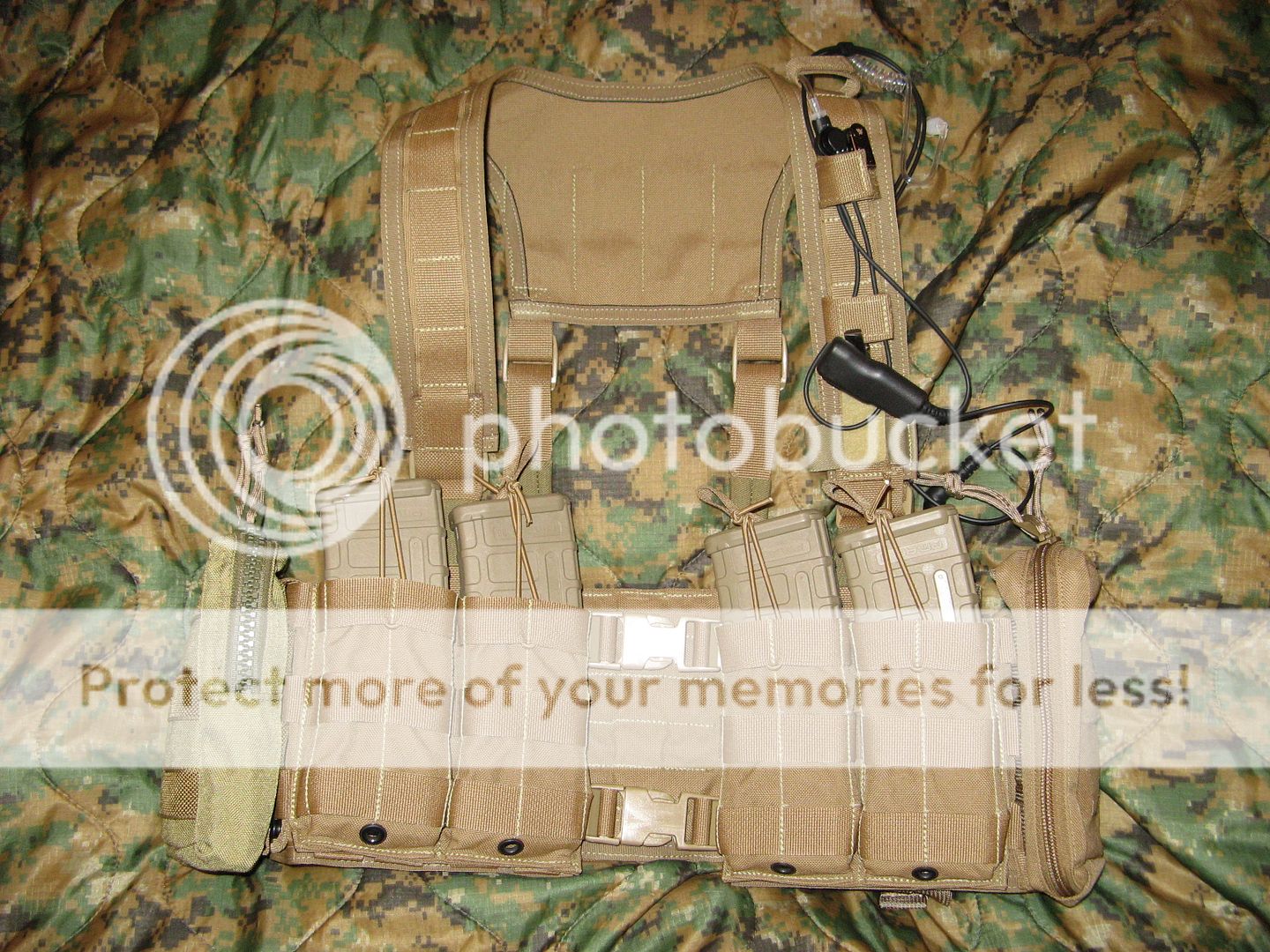
I have been around the tactical market, as a designer, maker, and user of weapons and equipment for a few years and I'd like to give you guys my take on it. There is so much BS out there that frankly, I don't know how one person could swim through it all and form a good opinion on his own, unless he did a lot of research and testing. My goal is to perhaps save you a lot of time and expense by relating my experiences and seeing if you find anything useful.
I had the privelage to attend a private training class, which was by invitation only to a few private gear-makers. It was a combination of gear symposium with a practical applications phase at the range. Each guy brought his own designs of tac nylon, which were discussed among the group, and then used in live-fire training. It was a very enlightening experience. One of the range instructors was a recent graduate of the operators training course, for a special missions unit. His approach to the subject was so simple, yet effective, that to this day it remains the gold standard for everything I do in tac nylon, or training for that matter.
Very briefly, what they do is strip away all the crap, and start out with just the gear you need to train and fight with a handgun. It progresses from lecture, to dry-fire, to live-fire, from up close, to distance. Then they add the rifle and support gear. Again it is practiced in progression until they are very proficient. Next they practice transitions, from rifle to pistol, and back again. After that armor and other mission-essential kit is added.
If you approach the subject in this manner, you will very quickly sort out what really works for you, and what doesn't. Instead of imitating what you see on the internet or in magazines, you will quickly realize what kind of kit you need and how it needs to be properly integrated to fight with. For instance, do a transition drill and see where your rifle falls, and what gets in the way of a smooth pistol drawstroke. Then change a pistol mag. Now re-holster and get your rifle back up with a fresh mag. If your gear is fighting you while you try to do these things, figure out why and fix it.
This weekend of exposure to real-world TT&P's was a real eye-opener for me. I wanted to pass that along to you guys because I think it is easy to get caught up in whatever is new or exciting, or tacti-cool, rather than taking a cold, hard look at what you really need to fight with, in your particular situation.
I had the privelage to attend a private training class, which was by invitation only to a few private gear-makers. It was a combination of gear symposium with a practical applications phase at the range. Each guy brought his own designs of tac nylon, which were discussed among the group, and then used in live-fire training. It was a very enlightening experience. One of the range instructors was a recent graduate of the operators training course, for a special missions unit. His approach to the subject was so simple, yet effective, that to this day it remains the gold standard for everything I do in tac nylon, or training for that matter.
Very briefly, what they do is strip away all the crap, and start out with just the gear you need to train and fight with a handgun. It progresses from lecture, to dry-fire, to live-fire, from up close, to distance. Then they add the rifle and support gear. Again it is practiced in progression until they are very proficient. Next they practice transitions, from rifle to pistol, and back again. After that armor and other mission-essential kit is added.
If you approach the subject in this manner, you will very quickly sort out what really works for you, and what doesn't. Instead of imitating what you see on the internet or in magazines, you will quickly realize what kind of kit you need and how it needs to be properly integrated to fight with. For instance, do a transition drill and see where your rifle falls, and what gets in the way of a smooth pistol drawstroke. Then change a pistol mag. Now re-holster and get your rifle back up with a fresh mag. If your gear is fighting you while you try to do these things, figure out why and fix it.
This weekend of exposure to real-world TT&P's was a real eye-opener for me. I wanted to pass that along to you guys because I think it is easy to get caught up in whatever is new or exciting, or tacti-cool, rather than taking a cold, hard look at what you really need to fight with, in your particular situation.
 (Medium).JPG)
 (Medium).JPG)


Comment