
 Tweet
Tweet
I started an experiment last November that I would like to pass along.
I wanted to store meat long term, but freezing it and rotating it presented a lot of problems. For one thing, it doesn't store well long term in the freezer. For another, freezer space is always at a premium. And last, but not least, once the power goes out, you are out of luck.
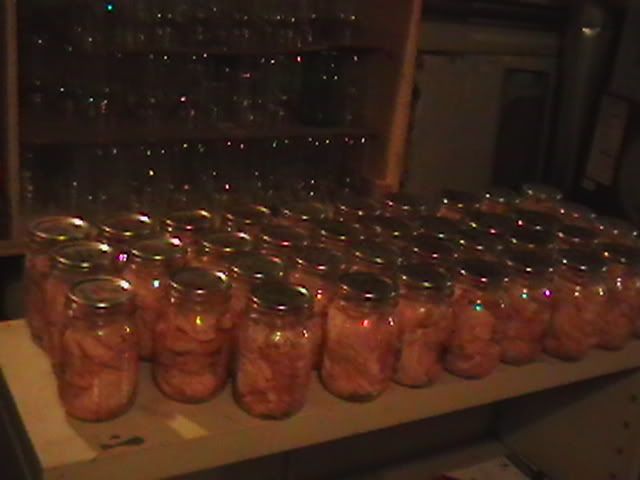
I decided to try canning meats. I bought a large pressure canner. I got a good one "All-American 25-Quart Pressure Cooker/Canner" on Amazon and bought a few dozen jars of various sizes. Anyway, to make a long story short, I went a little nuts for the next few months canning meats to see if I could come up with procedures that were cheap, easy and at least comparable to a commercial product. I have canned beef, chicken, hamburger, pork chops and even left over Thanksgiving turkey. I just opened a can of leftover turkey (9 months old) this week and it was delicious.
After tasting the turkey, I opened cans of chicken, beef and pork to try them out. After 9 months, I have not noticed any degradation at all in any of my products. I feel confident that they will last well over a year, so I have finally checked this experiment off as a success.
Here is how I can meat.
1. Use only pint or smaller jars! Larger jars take longer to heat. You have to kill clostridium bacteria spores. If the center of your jars don't get hot enough to kill the spores, you run the danger of botulinum or other nasty bacteria living in your product and poisoning you.
2. Follow the instructions for your canner. Every canner is slightly different and modern procedures are safe...if you follow them.
3. Vent the cool air before you close up by allowing the steam to exit freely for several minutes (7 minutes). Also, don't start timing the processing time until the pressure reaches 10 pounds. When the time is over, just turn off the heat and allow the pot to cool slowly. This will prevent a lot of seal failures as well as allowing the product to cook longer at high temperature. You should ere on the side of longer processing times. You won't notice much difference in the meat when it's done, but a few extra minutes can save your whole batch from spoiling.
Preparation:
I buy my meat already cut up for stir-fry, or hamburger...whatever is cheapest. I usually buy about 10-15 pounds at a time, depending on the size jars I am using. A pound of beef will just about fill a pint jar. The cheaper the cuts the better they seem to can. They are going to be cooked to death, so buy cheap, lean meat and it will retain a better texture.
I use 8 oz, 12 oz or pint jars. I stuff them within a half inch of the top with raw, cold meat. Most instructions you find in print call for hot packing (pre-cooking) the meat. I have done it both ways and found the cold pack method safe and effective and MUCH easier. It might be dangerous to do it this way with larger jars or minimal processing times, but I have never had even ONE bad seal and none of my jars has shown any sign of bacterial contamination.
For Chicken, remove all the skins and as much fat as possible and the product will look and taste better. I got a deal on whole chickens once and canned the parts bones and all. The bones, after canning are VERY soft and can be chewed up and eaten if you want, or simply removed when you take the chicken from the jar. Thighs work especially well in pint jars. Boneless breasts would be much better, but they are also much more expensive.
Processing:
I slowly bring up the pressure after venting steam for 7 minutes. When the pressure reaches 10 pounds, I lower the heat to medium so that my "canner weight" jiggles about every 3-5 minutes. I leave it at 10 pounds for a full 90 minutes (I only start the timer once it starts jiggling).
When the time is up, I turn off the heat and let the pressure drop slowly back to zero. When I open the pressure cooker, it's still boiling hot, so I lift my jars with a jar-lifting-tool and set them on a kitchen towel to cool. As they cool, I tighten the lids slightly. As they cool, they seal. Using this method, I have never had a bad seal. I remember my mother used to have an occasional failure, but I have not yet. I suspect she cooled her cooker too fast and caused her jars to boil over...or maybe the lids have just gotten better over the last 40 years, who knows? My method works.
Once they are cool, you can remove the rings (or leave them on if you wish) and store the jars away in a dark area.
Total prep, processing and clean up time is something like 3 hours per canner load, but this is deceptive. Actual prep and clean-up time (using my methods) is less than 20 minutes and the rest is simply waiting on a timer to go off. It's about the same amount of trouble as freezing if you re-wrap your meats before you freeze them.
Costs, once you own the jars, is under 3 dollars a load (counting electricity) above the cost of the meats. This is well under half the price of store bought canned meats and I think my quality is higher.
I still eat steaks and chops fresh or sometimes frozen, but for most other dishes, canned meats work as well as fresh. I find that I use my canned meat in preference to frozen meats for most purposes. The quality is excellent and they are extremely convenient. I have been buying about twice as much meat as I use and rotating my canned product. It's nice to watch my meat stocks grow every month.
Don't be afraid to give it a try. It might save you a bundle.
I wanted to store meat long term, but freezing it and rotating it presented a lot of problems. For one thing, it doesn't store well long term in the freezer. For another, freezer space is always at a premium. And last, but not least, once the power goes out, you are out of luck.
I decided to try canning meats. I bought a large pressure canner. I got a good one "All-American 25-Quart Pressure Cooker/Canner" on Amazon and bought a few dozen jars of various sizes. Anyway, to make a long story short, I went a little nuts for the next few months canning meats to see if I could come up with procedures that were cheap, easy and at least comparable to a commercial product. I have canned beef, chicken, hamburger, pork chops and even left over Thanksgiving turkey. I just opened a can of leftover turkey (9 months old) this week and it was delicious.
After tasting the turkey, I opened cans of chicken, beef and pork to try them out. After 9 months, I have not noticed any degradation at all in any of my products. I feel confident that they will last well over a year, so I have finally checked this experiment off as a success.
Here is how I can meat.
1. Use only pint or smaller jars! Larger jars take longer to heat. You have to kill clostridium bacteria spores. If the center of your jars don't get hot enough to kill the spores, you run the danger of botulinum or other nasty bacteria living in your product and poisoning you.
2. Follow the instructions for your canner. Every canner is slightly different and modern procedures are safe...if you follow them.
3. Vent the cool air before you close up by allowing the steam to exit freely for several minutes (7 minutes). Also, don't start timing the processing time until the pressure reaches 10 pounds. When the time is over, just turn off the heat and allow the pot to cool slowly. This will prevent a lot of seal failures as well as allowing the product to cook longer at high temperature. You should ere on the side of longer processing times. You won't notice much difference in the meat when it's done, but a few extra minutes can save your whole batch from spoiling.
Preparation:
I buy my meat already cut up for stir-fry, or hamburger...whatever is cheapest. I usually buy about 10-15 pounds at a time, depending on the size jars I am using. A pound of beef will just about fill a pint jar. The cheaper the cuts the better they seem to can. They are going to be cooked to death, so buy cheap, lean meat and it will retain a better texture.
I use 8 oz, 12 oz or pint jars. I stuff them within a half inch of the top with raw, cold meat. Most instructions you find in print call for hot packing (pre-cooking) the meat. I have done it both ways and found the cold pack method safe and effective and MUCH easier. It might be dangerous to do it this way with larger jars or minimal processing times, but I have never had even ONE bad seal and none of my jars has shown any sign of bacterial contamination.
For Chicken, remove all the skins and as much fat as possible and the product will look and taste better. I got a deal on whole chickens once and canned the parts bones and all. The bones, after canning are VERY soft and can be chewed up and eaten if you want, or simply removed when you take the chicken from the jar. Thighs work especially well in pint jars. Boneless breasts would be much better, but they are also much more expensive.
Processing:
I slowly bring up the pressure after venting steam for 7 minutes. When the pressure reaches 10 pounds, I lower the heat to medium so that my "canner weight" jiggles about every 3-5 minutes. I leave it at 10 pounds for a full 90 minutes (I only start the timer once it starts jiggling).
When the time is up, I turn off the heat and let the pressure drop slowly back to zero. When I open the pressure cooker, it's still boiling hot, so I lift my jars with a jar-lifting-tool and set them on a kitchen towel to cool. As they cool, I tighten the lids slightly. As they cool, they seal. Using this method, I have never had a bad seal. I remember my mother used to have an occasional failure, but I have not yet. I suspect she cooled her cooker too fast and caused her jars to boil over...or maybe the lids have just gotten better over the last 40 years, who knows? My method works.
Once they are cool, you can remove the rings (or leave them on if you wish) and store the jars away in a dark area.
Total prep, processing and clean up time is something like 3 hours per canner load, but this is deceptive. Actual prep and clean-up time (using my methods) is less than 20 minutes and the rest is simply waiting on a timer to go off. It's about the same amount of trouble as freezing if you re-wrap your meats before you freeze them.
Costs, once you own the jars, is under 3 dollars a load (counting electricity) above the cost of the meats. This is well under half the price of store bought canned meats and I think my quality is higher.
I still eat steaks and chops fresh or sometimes frozen, but for most other dishes, canned meats work as well as fresh. I find that I use my canned meat in preference to frozen meats for most purposes. The quality is excellent and they are extremely convenient. I have been buying about twice as much meat as I use and rotating my canned product. It's nice to watch my meat stocks grow every month.
Don't be afraid to give it a try. It might save you a bundle.

Comment