Announcement

Collapse
No announcement yet.

Many questions, as I move from short term to a somewhat longer term storage?

Collapse
X
 
  • Filter
  • Time
  • Show
Clear All
new posts

  • Many questions, as I move from short term to a somewhat longer term storage?

    I am wanting to branch out farther as the noob (newb) I am, but I have many questions.

    Much of My short term food storage I have dried jerky, fruits and vegetables. I have canned a variety of vegetables, and frozen both vegetables and fruits. I am on an extreme budget at this point (due to me leaving my long time career in the IT field (my fault)). But any how I want to move to a more of a longer term food storage. But I keep reading several posts and I think I'm getting more confused than before. Any assistance would be greatly appreciated...

    1. What is the difference between "Food Saver" type bags for storage, and Mylar bags?
    2. How do you tell a "food grade bucket" versus any other?
    3a. Are there different size Mylar bags that work better, 3b. is this determined by the size of the family?
    4a. I see where many of you are storing different varieties of wheat. Are some better then others for storage? 4b. And for the wheat, is this for bread types? 4c. Will I need a bread maker (if not where might I go to better learn how to make different bread types?)
    5a. If I want to make corn meal, do I need a mill to make corn? 5b. Or could I use something less expensive, although it may take more effort and be somewhat less effective? 5c. What type of corn should I use (sweet or other)?

    I have several more questions but that is probably more then I can handle at once at this point. I will be responding with more questions to any replies you may be willing to give.

    btw...
    Matt in OK, Thanks for your weekly emails, I have and am still learning many things that will help my family and me to survive a little longer in a P.A.W. I can't respond every week, but I just wanted to let you know that your efforts are much appreciated (at least by me).


    Thank you,
    Mike
    If Tyranny and Oppression come to this land, it will be in the guise of fighting a foreign enemy.
    ~James Madison

    You will eat your Brocoli and like it, or I'll have to TAX you.
    No more Big Gulps for you either!

  • #2
    These are my opinions of the questions but there much more qualified folks to answer them here
    Originally posted by TyrannyUnleashed;23864.[B
    1.[/B] What is the difference between "Food Saver" type bags for storage, and Mylar bags? Food saver will breakdown after a few years so it's medium term and mylar lasts much longer also providing a better light barrier
    2. How do you tell a "food grade bucket" versus any other? Triangle symbol with a 2 on it is GTG, there is no "Food Grade" that I have seen or anyone has shown as of yet
    3a. Are there different size Mylar bags that work better, 3b. is this determined by the size of the family? It's good to have a mixture IMO and think about how much would you use for instance would you us 5gl of a spice, probably not so smaller there with maybe say rice in a 5gl bag
    4a. I see where many of you are storing different varieties of wheat. Are some better then others for storage? 4b. And for the wheat, is this for bread types? 4c. Will I need a bread maker (if not where might I go to better learn how to make different bread types?) I will pass on this as wheat is not part of my current plan due to dietary restrictions with my wife
    5a. If I want to make corn meal, do I need a mill to make corn? 5b. Or could I use something less expensive, although it may take more effort and be somewhat less effective? 5c. What type of corn should I use (sweet or other)?The Hopi Indians used a couple of rocks but it is very laboring, I have a small amount of popcorn put up
    hope this helps bro
    Knowledge is Power, Practiced Knowledge is Strength, Tested Knowledge is Confidence

    Comment


    • #3
      Originally posted by TyrannyUnleashed View Post
      I am wanting to branch out farther as the noob (newb) I am, but I have many questions.

      Much of My short term food storage I have dried jerky, fruits and vegetables. I have canned a variety of vegetables, and frozen both vegetables and fruits. I am on an extreme budget at this point (due to me leaving my long time career in the IT field (my fault)). But any how I want to move to a more of a longer term food storage. But I keep reading several posts and I think I'm getting more confused than before. Any assistance would be greatly appreciated...

      1. What is the difference between "Food Saver" type bags for storage, and Mylar bags?
      2. How do you tell a "food grade bucket" versus any other?
      3a. Are there different size Mylar bags that work better, 3b. is this determined by the size of the family?
      4a. I see where many of you are storing different varieties of wheat. Are some better then others for storage? 4b. And for the wheat, is this for bread types? 4c. Will I need a bread maker (if not where might I go to better learn how to make different bread types?)
      5a. If I want to make corn meal, do I need a mill to make corn? 5b. Or could I use something less expensive, although it may take more effort and be somewhat less effective? 5c. What type of corn should I use (sweet or other)?

      I have several more questions but that is probably more then I can handle at once at this point. I will be responding with more questions to any replies you may be willing to give.

      btw...
      Matt in OK, Thanks for your weekly emails, I have and am still learning many things that will help my family and me to survive a little longer in a P.A.W. I can't respond every week, but I just wanted to let you know that your efforts are much appreciated (at least by me).


      Thank you,
      Mike


      1- vac saver bags are not suitable for LTS. Can they be used yes, but you will have longer shelf lifes with mylar.
      2- buy new or use "used" food buckets - ie: pickle,icing buckets- nill point imho if your using mylars
      3- depdns on the amounts your packing. IMHO if your buying in bulk (100+ lbs bigger bags and buckets work better/faster)
      4- wheats ,wheat to me. yes a grinder, and an oven helps LOL
      5- no and yes. No you dont a mill, yes a mill will make things REAL easy. A rock can be used if need be ;P


      Im keeping it simple.
      one thing dont over think what your getting started in ..it will over load you . K.I.S.S and youll be alright.
      Hey Petunia...you dropped your man pad!

      Comment


      • #4
        Be careful with Jerky. It can go bad faster than you think, once it is open. I got my dog sick on jerky that was open for a couple of months. Also jerky lacks enough fat to provide the nutrition you need. The fruit and vegetables you are storing are also missing fat. Get some bottles of oil. I love olive oil, it should last a couple of years. You need fat, or your nervous system will be depleted, and your brain will stop functioning properly, etc.

        Get some FAT stored in both your long term and short term supply. Short term storage of fat is simple and easy, a couple of bottles of olive oil. Long term storage is more challenging once extend past a couple of years.
        EXPECT THE BEST - PREPARE FOR THE WORSE

        KEEP ON PREPPING

        Comment


        • #5
          Originally posted by Matt In Oklahoma View Post
          These are my opinions of the questions but there much more qualified folks to answer them here


          hope this helps bro
          Aha! This grasshopper has a baby brother!
          "It wasn't raining when Noah built the Ark"

          Comment


          • #6
            We don't need no stinking bread machines!

            Everyone else answered most of these already.

            If time is of any matter to you, their no reason to use smaller mylars if your storing quantities of food that will fit in larger mylars. Your rice is not going to go "POOOFFF!" and disappear 10 seconds after opening a 45 lb. mylar bag of it contrary to popular belief.

            Corn you want dent corn, or whole corn, or field corn. Called different things in different areas. "Sweet" corn is like vegetable corn, corn on the cob type stuff. If you want corn to grind, cornmeal, etc. then you want whole corn/dent corn/field corn.
            Boris- "He's famous, has picture on three dollar bill!"

            Rocky- "Wow! I've never even seen a three dollar bill!"

            Boris- "Is it my fault you're poor?"

            Comment


            • #7
              Agree about the food saver - they are not good for LTS. I use mine all the time for daily food storage, but the bags loose their seal with any sharp food like noodles as well as over time. The bread machine is certainly not going to work if your don't have power.

              http://www.breadtopia.com/basic-no-knead-method/ This link has helpful videos on how to make bread with nothing but yeast, wheat flour and water. You can bake decent bread in a solar over.

              This site also has an excellent method of making your own yeast culture for sour dough which will last as long as you care for the culture. Search the site for a video showing you exactly how do this.

              Comment


              • #8
                Thank You monkeybird for the great link!
                God Bless
                OldFarmer2

                Comment


                • #9
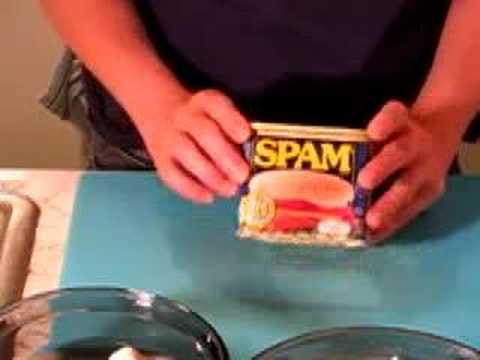
                  Thanks for all the responses from everyone. I should have clarified more about my short term storage. I did not include what we buy from the store already canned. I have more cans than I care to count when it comes to food meats with plenty of fat... Yes I'm talking about SPAM not to mention others. My wife is from Hawaii, and those Hawaiians love their SPAM. We mainly use it for SPAM Musubi (best to use Sushi rice). See a how to make guide below. I have just about everything we use daily in the pantry. The biggest difference is that I buy one or two extra if I buy one, and then set those extra aside to be rotated when using. I also have two or three bottles ov olive oil in stand by. But i'm glad that it was mentioned to long term store the oil. For some stupid reason, I wouldn't have even thought about doing that, so thank you Patriot!
                  And Bird, thank you for the great link as well. This will give me a quite abit to look at learn and use for my preperations.
                  1Admin, That's funny, I grew up in Indiana, and had farm after farm full of field corn around me. I was always told that field corn was for feeding the farm animals, no one ever said anything about cornmeal...lol

                  If Tyranny and Oppression come to this land, it will be in the guise of fighting a foreign enemy.
                  ~James Madison

                  You will eat your Brocoli and like it, or I'll have to TAX you.
                  No more Big Gulps for you either!

                  Comment


                  • #10
                    Thanks MB and TU!!

                    Be sure to also put these links under the cooking and recipe section too.
                    "It's a trap!!!!" -- Admiral Ackbar

                    Comment


                    • #11
                      Dear Mike:

                      Getting started is a real pain isn't it. the main thing is don't give up.

                      I believe your question regarding the difference between food saver bags and Mylar bags may have been answered. Just in case though, the food saver bags require machine (powered) to complete the vacuum and seal. they are clear and don't keep light out. They tend to break down quicker and were really intended for cold food storage when developed (freezer mostly). they are also much smaller than the Mylar bags you need. For storage in 5 or 6 gallon FOOD grade buckets you need a bag that is 20.5 inches by 30 inches. Years ago we had access to a gas place where we could get Nitrogen bottles which we used to purge the oxygen from the bags prior to sealing. Today it is more in use of oxygen absorbency Packets.

                      I would check with JRH and see if he has Mylar bags in his line. If not Emergency Essentials, Nitro-Pak, Frugal, and others will have them.

                      Food Grade buckets is a tough one. It really comes down to how the bucket is made and with what components the plastic is made up of. Usually and I mean usually not always, Food grade buckets are white in color. Color in plastic introduces yet another variable to the mix. there is no mark on a bucket to tell you it is food grade. You can go back to the manufacturer and get their sheet on them. the number 2 in a triangle is a recycle indicator only. I know Lowes has Food grade buckets for between $4 and $6. they are on sale now for $3.99 each. this does not include the lid. You need a lid with a gasket that will act as an additional seal for your food. If you really feel wealthy go with a gamma seal lid which will be more than the bucket. they are very good if you can afford them. If you buy from a reputable source like JRH, Lowes or any of the main line dealers they are not going to sell you something as food grade that is not.

                      If you are going to buy grain in bulk you need to invest in at least one grain mill. Shop around to find the one that best suits your needs. I have three different mills. One is set up for wheat, one for nuts and the third is held in reserve. You can start with one like Back to the Basics that runs under $80 usually. I am sure some of the real bread makers here can give you much better advice on that. I am a lousy cook. that is why is have a lot of flour in cans already done in my storage. I buy corn meal as an example since it is fairly cheap. I like the sweet meal. Personal pref. Bread makers are not my thing so that is something you need to seek the real cooks advice on.

                      Sounds like you are coming along really well on your preps. Hang in there. guys like Robert and the folks on this forum are a much more involved bunch than on some of them. Boards tend to reflect the founder and the Moderators. Looks like you found good people. Always look for the good and you will find it. GB

                      Comment


                      • #12
                        reference the wheat thingie: the higher the gluten, the easier the bread rises, but in a pinch, who cares about pretty bread, as long as it is tasty?
                        I get hard red winter wheat from the feed co-op. Bird wheat is cleaner. But the price (50 lb for $10) is right. Be sure there are NO additives - tell the sales person you mix your own feeds. If you tell them it is to eat, they may not sell you any, as many places have rules. I spoke to the immigrants who work there, the big difference between people wheat and bird wheat is that the people wheat has a bigger kernel and is a little cleaner. But they (the workers) eat the bird wheat themselves. Some lots are cleaner than others so buy a little at first, and if it is nicely clean (chunks of dirt, pebbles, etc) then buy more.

                        I also get my whole kernel 'feed corn' from the feed store. Again, the price is right. It grinds just as easy, makes hominy, cornmeal, etc just the same as the store stuff, though I do wash it (Rinse and pick over in a colander, like dry beans) before using. Ditto whole soybeans if you can get them plain and un-toasted (the coop likes to toast them, they store longer, but do not cook up properly nor are they as versatile for other soy projects). I usually just go to the farmer who is harvesting the soys with a couple 5-gal pails and $20 bills. They like folding money, and may invite you over to buy corn, too.

                        Comment


                        • #13
                          My storage wheat for long term comes from the local co-op. It is hard red wheat, triple cleaned. Feed wheat kernels are smaller than people wheat kernels, but the immigrants who work there use them for food with no ill effects (they gave me some awsome recipes). Ditto the corn I store. Feed store whole kernel yellow field corn. Grind either just before using, as they store longer whole kernels. With these I can make bread, but I use them more for corn mush, tortillas, masa, pancakes and other flat 'breads' that are more easily made under austere conditions. Prices for feed store or co-op grains are much, much lower than people sources. For soybeans, don't use the feed store, they tend to like to toast the beans so they store longer. Then they are not as versatile. For those, I go for a drive in the autumn with several food buckets and $20 bills. Farmers like folding money, too.

                          Comment

                          Working...
                          X