Announcement

Collapse
No announcement yet.

Responding as a First Responder

Collapse
X
 
  • Filter
  • Time
  • Show
Clear All
new posts

  • Responding as a First Responder

    So now that you have bought your coolio med kits from here http://www.jrhenterprises.com/Medical-Kits_c2.htm
    and have gotten all trained up with your folks, the Red Cross and other sessions and have reached tier level 1 in first aid you have reached the pinnacle right?
    So there you are driving home feeling pretty good about all your new found powers and coolio gear stowed in the proper place at all time and BOOM there is a wreck in front of you. Someone needs to do something right? Well you have trained hard and are someone now right? So you leap into action grab the go bag and start reciting the lifesaving measures in your head as you run to the wreck. Then this happens


    I hate that this had to happen but let it not be in vain. In the majority of classes you take one of the first things they teach and even make you actively say is "Is The Scene Safe?". We, and I mean me, get in too big a hurry as we, and I mean I, throw on the cape and fly into rescue mode. I am the worst for it.
    The scene must be evaluated. If they die in that second or two then it was out of your hands and was Gods will.

    This resource might help as well
    Knowledge is Power, Practiced Knowledge is Strength, Tested Knowledge is Confidence

  • #2
    WOW, thanks for the video.
    So Sad that this happened but it is a good learning experience.
    In SAR we call it "rescue fever" the feeling that I need to get there now and do something. We try to stress that you can't help the person if you become a patient.
    Survival question. What do I need most, right now?

    Comment


    • #3
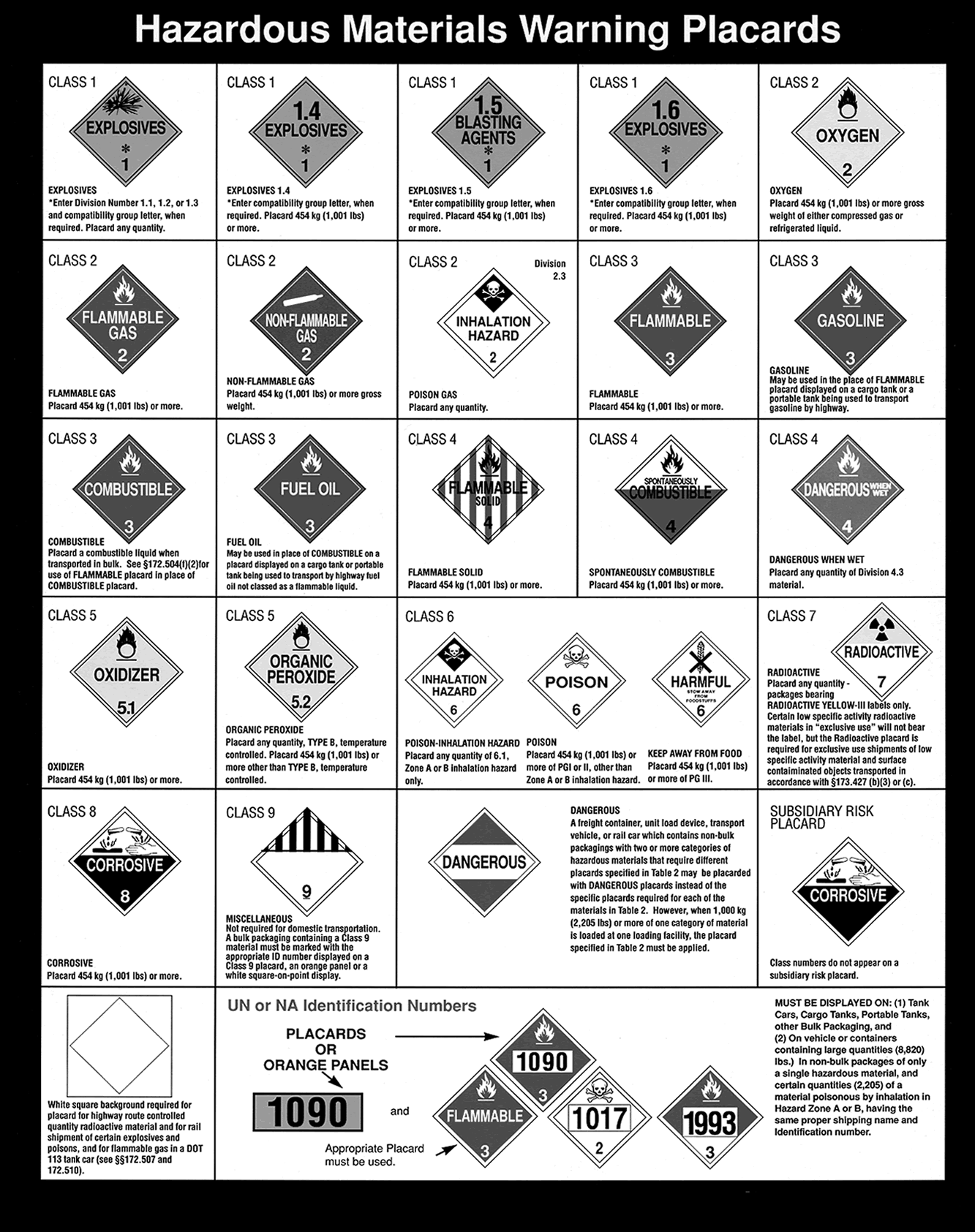
      Something to be mindful of. Most vehicles carrying HAZMAT are generally marked save small amounts in local deliveries. Here is a chart of the normal HAZMAT marked items. If you see a vehicle with one of these placards on fire, discretion is the better option and back off.


      There are several cordon sizes associated with the different types of materials, but generally a thousand feet is a good start. For larger tanker types, half mile is starting and more distance up or cross wind is best. Always remember to move up or cross wind from spills and fires.

      Also, for respirator masks, a lot of them don't protect against TIM (Toxic Industrial Materials) or inhalation hazards of certain chemicals. When buying a pro mask, be wary of what it can and can't stop. Firefighters are all equipped with SCBA (Self Contained Breathing Apparatus) which provides a clean air exchange in a toxic environment which is why they can go in and out easily. But again, many of the .mil surplus masks and commercial filters don't stop these kinds of items so check before you buy. It's typically better than nothing, but use it to escape rather than attempt to continue working in a contaminated environment.
      Experience is a cruel teacher, gives the exam first and then the lesson.

      Comment


      • #4
        When Hazmat is involved, the best thing a citizen can do is keep other people from becoming victims. By rushing in to "help" most citizens become victims themselves. The best thing you can do is to Call 911 and then keep others away and enlist other possible helpers to do the same from differing angles of approach.

        Comment


        • #5
          Something else to be mindful of - as a first responder, the more training you have, the more responsibility you take on. Not the responsibility to render aid, in fact, as a citizen, you have NO responsibility to render aid in any situation. What I'm talking about is responsibility for your actions. If you are trained and choose to render aid and do not adhere to the standard of care, or make an egregious mistake, you can be held responsible. Some states have Good Samaritan laws, most of these laws do not cover trained first responders. The more training, the less the law covers you. As a paramedic I was held to a much higher standard than the first aider or the doctor who stopped to help, even though the doctor could override my treatment decisions. That was because I was trained to work in the mud and the blood; the first aider was also trained but not to my level and should be following my instruction, the doctor has more medical training but he's trained to work in a hospital or office and is totally out of his element.

          I'm not trying to dissuade anyone from rendering aid in an emergency; just realize you have a responsibility to act in accordance with established protocols and it is your responsibility to know what they are and to keep your training up to conform to them. The higher your level of training, the more work it takes to keep it up.

          Comment

          Working...
          X