Announcement

Collapse
No announcement yet.

Orchards

Collapse
X
 
  • Filter
  • Time
  • Show
Clear All
new posts

  • Benn Gleck
    replied
    Originally posted by motesjm View Post
    I wish I could get a thick stand of those growing along my fence line. Nature's very own concertina wire.

    They'd be great for that but they are murder on tires! I've had to put a couple of plugs in my ATV tires because of them. No kidding some of the thorns are 5" long!

    I've heard there's a thornless honey locust that they are using as a landscape tree, maybe thats what the guy is using in his orchard. The tree makes a nice filtered shade and very little leaf litter because of the small leaves but it has a metric crap ton of pods some years like this one. The pods are edible, I tasted one this year and I'm still living..... hey maybe thats why I'm growing a second head!?
    Leave a comment:


  • motesjm
    replied
    Originally posted by Benn Gleck View Post
    What if there is a better non-Monsanto way of growing our food?


    I'm wondering if the honey locust trees he was using for nitrogen fixing is the same honey locust trees that I have growing at my BOL? They are the nastiest tree I've ever seen. They are covered in HUGE thorns, we call them Jesus trees cause they look like the thorns used to make his crown.
    I wish I could get a thick stand of those growing along my fence line. Nature's very own concertina wire.
    Last edited by motesjm; 01-10-2014, 09:19 PM.

    Leave a comment:


  • 610Alpha
    replied
    Originally posted by Benn Gleck View Post
    I'm wondering if the honey locust trees he was using for nitrogen fixing is the same honey locust trees that I have growing at my BOL? They are the nastiest tree I've ever seen. They are covered in HUGE thorns, we call them Jesus trees cause they look like the thorns used to make his crown.
    I believe Honey Locust is a Nitrogen fixer...so is Black Locust (it is in the top 3 I believe) plus the wood is tough and great to burn.

    Leave a comment:


  • Benn Gleck
    replied
    Originally posted by 610Alpha View Post


    The guy claims he hasn't fertilized in 6 years.

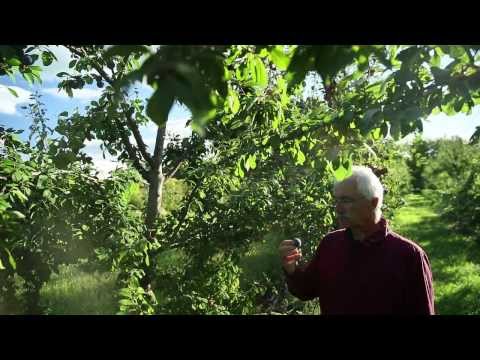
    QUOTE]Twenty years ago, Stefan Sobkowiak bought a commercial apple orchard with the intention of converting it to an organic orchard. He did just that, but eventually understood the limitations of the organic model originating from monoculture. He then decided to tear out most of the trees and replant in a way that would maximize biodiversity and yield while minimizing the amount of maintenance required. Inspired by permaculture principles, the orchard now counts over 100 cultivars of apples, plus several types of plums, pears, cherries, and countless other fruits and vegetables.
    What if there is a better non-Monsanto way of growing our food?[/QUOTE]


    I'm wondering if the honey locust trees he was using for nitrogen fixing is the same honey locust trees that I have growing at my BOL? They are the nastiest tree I've ever seen. They are covered in HUGE thorns, we call them Jesus trees cause they look like the thorns used to make his crown.

    Leave a comment:


  • 610Alpha
    replied


    The guy claims he hasn't fertilized in 6 years.

    QUOTE]Twenty years ago, Stefan Sobkowiak bought a commercial apple orchard with the intention of converting it to an organic orchard. He did just that, but eventually understood the limitations of the organic model originating from monoculture. He then decided to tear out most of the trees and replant in a way that would maximize biodiversity and yield while minimizing the amount of maintenance required. Inspired by permaculture principles, the orchard now counts over 100 cultivars of apples, plus several types of plums, pears, cherries, and countless other fruits and vegetables.[/QUOTE]

    What if there is a better non-Monsanto way of growing our food?

    Leave a comment:


  • SCinPNW
    replied
    What size of fruit trees do you recommend full size, semi-dwarf, or dwarf? I have looked at the pros and cons of all the sizes and am thinking that semi-dwarf for our orchard due to their smaller size.

    We will be closing on a shy 10 acre piece in January/February timeframe and as Admin1 recommends at the beginning of this thread I want to be ready to move with getting the orchard started.

    Thanks for any feedback you have.
    SC

    Leave a comment:


  • All Talk
    replied
    If I had a blank slate on a retreat I would employ espalier techniqies in my orchard (this is where you train trees to grwo on wires and keep them prunded back to two dimensions). It is more owrk initially but the fruti density per unit area will eventually be much higher.

    my fantasy arrangment around the retreat bulidings is that these wires run radially ur from firing positioons, so that the trees provide no cover for assailants while simultantouelsy channelling them into "kill zones."

    I actually do the espalier orcharding at my home, but the defensive configuration was not an option there.

    Leave a comment:


  • Matt In Oklahoma
    replied
    Originally posted by WiseOwl View Post
    One thing I have realized from riding around in my area, scoping neighbors (qpublic is a good site), looking at routes, etc is that I see TONS of fruit trees on peoples properties that have been FULL for weeks and it seems like they arent even picking it. I saw an apple tree yesterday where it looked like the apples were rotting. It kinda ticks me off living out in the country and seeing stuff go to waste. I thought this was practice of suburban wave riding dumbsday preppers. I guess this is the Captain Nature Guy in me.
    I can only hope that when we get ours going that I never look back and say damn I am that guy who doesnt take the time to utilize my resources.


    My wife and I have talked about canning and even dehydrating and storing in mylar and even selling some of the abundance
    Feller should go ask for some then offer some canned ones afterwards as a repayment and maybe keep the seed for spring for his own orchard

    Leave a comment:


  • WiseOwl
    replied
    One thing I have realized from riding around in my area, scoping neighbors (qpublic is a good site), looking at routes, etc is that I see TONS of fruit trees on peoples properties that have been FULL for weeks and it seems like they arent even picking it. I saw an apple tree yesterday where it looked like the apples were rotting. It kinda ticks me off living out in the country and seeing stuff go to waste. I thought this was practice of suburban wave riding dumbsday preppers. I guess this is the Captain Nature Guy in me.
    I can only hope that when we get ours going that I never look back and say damn I am that guy who doesnt take the time to utilize my resources.


    My wife and I have talked about canning and even dehydrating and storing in mylar and even selling some of the abundance

    Leave a comment:


  • rockriver
    replied
    peaches gone. blueberries gone. figs fading.
    pears are coming next.. just a few trees, but loaded.. limbs are breaking.
    we should have pruned!
    last year we had very few pears... this year the trees are loaded. i'm crediting it
    to the heavy rains.. ?? i need and want to learn more quickly.
    i'm learning here and a few advisors.. but the advisors sometimes conflict...
    a nearby county has a course in gardening that the county extension office sponsors.
    several month process.. classes/fieldtrips are twice a week. cost 130. thinking about it. i'm trying to remember the phrase.. i'm investigating it! checking it out! i'm doing a chart! i don't want to make a mistake, so i'm doing my research! THAT'S IT.. oops sorry for shouting.. but, the ole memory finally worked... that's the phrase i was looking for. "i'm doing my research."
    rr

    Leave a comment:


  • Lowdown3
    replied
    We pruned heavy and thinned a few trees this year. Between that and the monsoon, it wasn't a stellar year for fruits for us.

    The rains have helped a new dozen or so trees get well established in a new area though, which is good.

    Leave a comment:


  • rockriver
    replied
    great info..
    getting us some plum trees.

    some of our trees are in holes i dug with a 12" auger.. this made the job go fast, BUT
    the surrounding soil didn't get softened up and the soil quality didn't get improved, and thank you again mote.

    i just checked on the fig trees we planted a couple of years ago.. just a few figs..
    admin, you are sure right... get them in the ground "first year"

    Leave a comment:


  • motesjm
    replied
    Here's my take:

    Start planning now. Go to the UGA website and you'll find volumes of information about which varieties of the fruit you listed will do best in your area. You might try Auburn's extension service (www.aces.edu) as well since they are right next door.

    Choose different varieties that will give you the longest harvest duration. By planting early, mid and late maturing types you can extend your availability of fresh fruit from a couple weeks to several months. I'm attaching a couple files showing the varieties I chose and the harvest period.

    Plant in late winter/early spring. Spacing will depend on what size trees you want - dwarf, semi dwarf or full size. All of my trees are full size and I went 24 feet apart in all directions for everything except the pecans. Those are 40 feet apart. Probably could have gone less that that.

    Segregate - keep apples close to apples, pears with pears, ect to get better pollenation.

    What they say about a $20 dollar hole for a $10 tree - that is true. And even better, replace that clay soil with some dirt from the woods when you backfill around the roots of your new trees. Make a little lip around the outer perimeter of the hole to help it hold water if you have to irrigate.

    I've had good luck with bare root trees from reputable nurseries. These are less expensive than potted trees from the big box stores and can be shipped. They will take a couple more years to produce and take more attention the first year but you can plant 3 bare trees for the price of one potted tree. You might want to plant a few potted trees to get limited earlier production and also plant bare trees to increase the volume over the long run.
    Attached Files

    Leave a comment:


  • WiseOwl
    replied
    Looking for some advice with planting fruit trees.
    Now that we have the inside of the new house complete, its time to start "branching" out. About 2/3's of usable area is now cleared (will have to wait until fall/winter to do the rest)
    I have clay soil in the front yard and a sandy loam in the back
    In the front its drier but I have an irrigation system (didnt find out about this until a month after I moved in)
    In the back there are 3 springs and with all the rain lately I have found where the water flows and holds.

    Our wants:

    Apples
    Pears
    Peaches
    Blueberries
    Blackberries
    Plums
    Pecans
    Grapes


    Could someone with some REAL experience please school me on whens the best time to plant, varieties to get, etc. I am in Central GA Zone 8.

    I have never dabbled in the fruit tree area and with my new property, its top 5 on the agenda.


    Grasshopper is all ears!

    Leave a comment:


  • MustangGal
    replied
    Thanks for the information. I don't think we will have enough room to plant as many as you recommend, but we currently have three peach and two apple (planted spring 2012), with plans to add more apple trees this spring.

    Leave a comment:

Working...
X