 Tweet
Tweet
What are you going to do with the harvest? What are you going to do now? What are you going to do after TSHTF?
Not always easy answers and very multi faceted when you consider it all.
"Oh, I'll just can everything." (glass jar canning)
"Drying is the only way to go." (sun or electric powered dryer)
"I'll just eat it fresh" (great theory but never seems to work out in practice.
Let's cover these BOTTOM to top.
"I'll just eat it fresh."
OK, so your saying, something is ALWAYS fresh in your garden? 24/7 365? And something in QUANTITY to feed you, every day, nothing to put up? Cough, cough, o.k..... No winter where you are at? Or for those of us "roun here" the summers are the killer. Hard to keep most anything growing well past mid July without a boatload of regular, uninterrupted irrigaiton.
Eating completely fresh ALL the time? I.e, lunch is in an hour go out to the garden pick everything for lunch and dinner DAILY, YEAR round? Not very realistic for most of us.
Drying is the only way to go"
Still gotta disagree with HOME DRYING for a long term storage method. Note the words LONG TERM. Apple slices dried in an Excalibur dehydrator last summer, put into dry mason jars and put up last summer are NOTICEABLY more flexible (less dry) now. Humidity is a killer down our way. May work out west, I don't know...
We are drying apples now. A quarter of a 5 gallon bucket fills out 9 trays in an Excalibur dehydrator. SEVEN TO FIFTEEN HOURS LATER and a CONSIDERABLE AMOUNT OF POWER USED, we'll have apples that we will put in ziplock bags that will be good I know for roughly a year.
In even the low SEVEN HOUR time frame, we could have made several rotations in canner(s).
Still though- advantages are no jars used, no lids to replace, no broken jars, slightly less heat produced in the process (canning/drying in the early summer during 90-100 degree days this does matter). Fuel used in canning is less however it could be argued that the solar power for the dehydrator is renewed regularly. The LP for the stove is not....
Just stopping typing for a few seconds reminded me of another potential drawback of the dehydrator- the darn thing is LOUD and it's really quiet right now. Flipside of that is that we wouldn't be able to pull a "fire and forget" i.e, get it started and go to bed type deal with a canner whereas we can with the dehydrator.
See why I called it "considerations" instead of "this one is better than that one." :)
I'll just can everything"
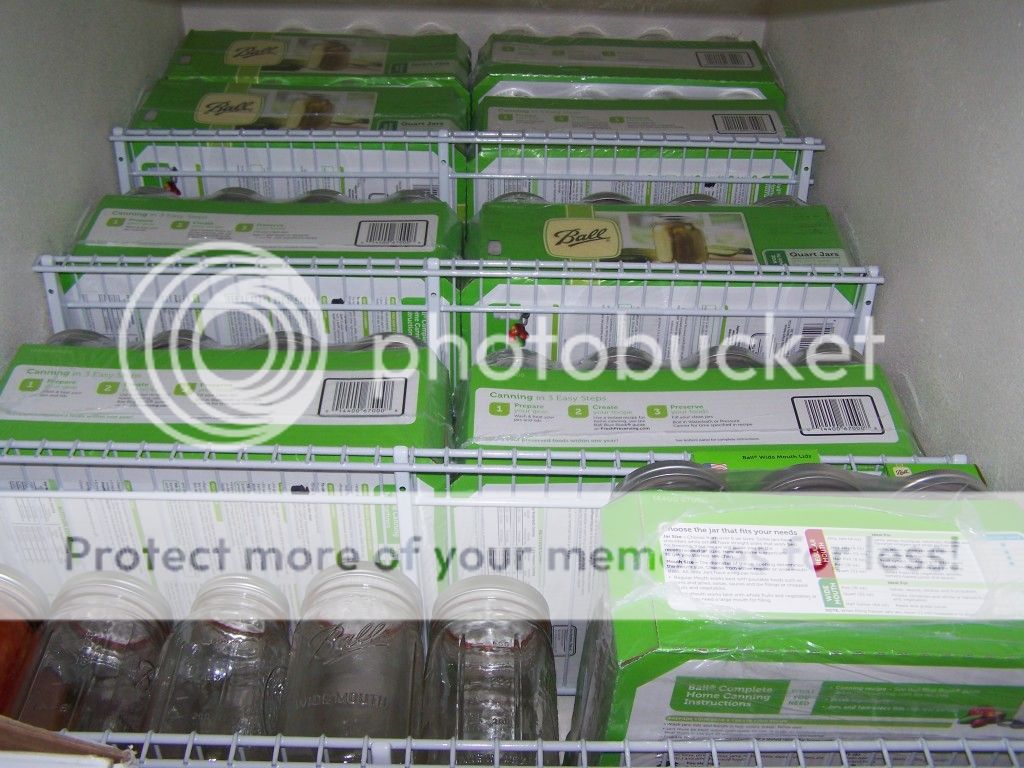
Cost of jars (assuming you pay full price) does cause concern. This assumes the reader isn't smart enough or energetic enough to: buy them on closeout in the fall from the big box stores for $4- 5. per case of quarts, get them at yardsales for $.10 to .25 cents each or find people who will actually GIVE them to you for free. OK, last one is a little tough now that the economy collapsed, but previous to that, it wasn't a monumental task.
We can (glass jar) most of our produce as course of habit. Usually a hundred to 200 quarts of green beans, a similar amount of applesauce or apple slices, a fair amount of potatoes, sweet corn, sometimes carrots, plums, pears in smaller quantities, etc.
I prefer water bath canning because I'm a "method and process" type of person. Usually the wife is prepping the food and I keep the next 6, 10, whatever amount of jars ready to go while the current batch is processing. When the timer rings. I shut off the flame, give it about a minute with the lid off, then start pulling jars. Once the last jar is off, the flame is back up and the new batch goes in. Very little down time.
With pressure canning you have all that hassle of waiting for the pressure to drop after the first load is done, pulling the load, new load put in, flame applied, blow out steam for 7 minutes, then put the cap on, then wait for pressure to get to the required amount and THEN start the timer again..... I greatly prefer water bath canning where we can.
Didn't touch on freezing. We have a small freezer that is part of our fridge, it's on the bottom versus on the top. Currently it's full of deer, goat, rabbit and chicken. Their is some fresh snow peas in there also. We just don't have room to freeze too many fruits or vegs.
Take all these considerations into mind when viewing your preservation considerations.
Robert
Not always easy answers and very multi faceted when you consider it all.
"Oh, I'll just can everything." (glass jar canning)
"Drying is the only way to go." (sun or electric powered dryer)
"I'll just eat it fresh" (great theory but never seems to work out in practice.
Let's cover these BOTTOM to top.
"I'll just eat it fresh."
OK, so your saying, something is ALWAYS fresh in your garden? 24/7 365? And something in QUANTITY to feed you, every day, nothing to put up? Cough, cough, o.k..... No winter where you are at? Or for those of us "roun here" the summers are the killer. Hard to keep most anything growing well past mid July without a boatload of regular, uninterrupted irrigaiton.
Eating completely fresh ALL the time? I.e, lunch is in an hour go out to the garden pick everything for lunch and dinner DAILY, YEAR round? Not very realistic for most of us.
Drying is the only way to go"
Still gotta disagree with HOME DRYING for a long term storage method. Note the words LONG TERM. Apple slices dried in an Excalibur dehydrator last summer, put into dry mason jars and put up last summer are NOTICEABLY more flexible (less dry) now. Humidity is a killer down our way. May work out west, I don't know...
We are drying apples now. A quarter of a 5 gallon bucket fills out 9 trays in an Excalibur dehydrator. SEVEN TO FIFTEEN HOURS LATER and a CONSIDERABLE AMOUNT OF POWER USED, we'll have apples that we will put in ziplock bags that will be good I know for roughly a year.
In even the low SEVEN HOUR time frame, we could have made several rotations in canner(s).
Still though- advantages are no jars used, no lids to replace, no broken jars, slightly less heat produced in the process (canning/drying in the early summer during 90-100 degree days this does matter). Fuel used in canning is less however it could be argued that the solar power for the dehydrator is renewed regularly. The LP for the stove is not....
Just stopping typing for a few seconds reminded me of another potential drawback of the dehydrator- the darn thing is LOUD and it's really quiet right now. Flipside of that is that we wouldn't be able to pull a "fire and forget" i.e, get it started and go to bed type deal with a canner whereas we can with the dehydrator.
See why I called it "considerations" instead of "this one is better than that one." :)
I'll just can everything"
Cost of jars (assuming you pay full price) does cause concern. This assumes the reader isn't smart enough or energetic enough to: buy them on closeout in the fall from the big box stores for $4- 5. per case of quarts, get them at yardsales for $.10 to .25 cents each or find people who will actually GIVE them to you for free. OK, last one is a little tough now that the economy collapsed, but previous to that, it wasn't a monumental task.
We can (glass jar) most of our produce as course of habit. Usually a hundred to 200 quarts of green beans, a similar amount of applesauce or apple slices, a fair amount of potatoes, sweet corn, sometimes carrots, plums, pears in smaller quantities, etc.
I prefer water bath canning because I'm a "method and process" type of person. Usually the wife is prepping the food and I keep the next 6, 10, whatever amount of jars ready to go while the current batch is processing. When the timer rings. I shut off the flame, give it about a minute with the lid off, then start pulling jars. Once the last jar is off, the flame is back up and the new batch goes in. Very little down time.
With pressure canning you have all that hassle of waiting for the pressure to drop after the first load is done, pulling the load, new load put in, flame applied, blow out steam for 7 minutes, then put the cap on, then wait for pressure to get to the required amount and THEN start the timer again..... I greatly prefer water bath canning where we can.
Didn't touch on freezing. We have a small freezer that is part of our fridge, it's on the bottom versus on the top. Currently it's full of deer, goat, rabbit and chicken. Their is some fresh snow peas in there also. We just don't have room to freeze too many fruits or vegs.
Take all these considerations into mind when viewing your preservation considerations.
Robert

Comment