 Tweet
Tweet
Now I don't typically post these sorts of things...but ya know? It kind of caught my attention.
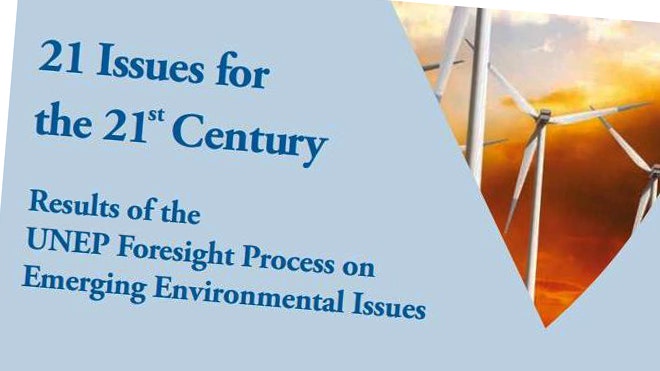
I'm not a tin foil hat wearing kind of guy. 99.9% of the time there is a logical explanation behind what some might call a tin foil frenzy. But this being mainstream media and all? Certainly gives one pause for thought.
So overall, the UN wants to control the food and water distribution for the planet? To ensure everyone gets their fair share? Now I'm completely understanding that some countries just cannot get by, either due to a natural occurrence (drought or something like that) or from complete mismanagement of a government entity or the government as a whole (North Korean comes to mind). But overall, this is not something that needs to be done from an international standpoint. And furthermore, my own government supports the idea:
Not really getting a warm fuzzy after reading that article.
So I have my little garden in the back of my land. I have...let's say for sake of argument 5 acres of land. 2 arable, 3 forest. I have a half acre garden which provides me with more than enough to feed me and my family along with selling, trading or giving some to the neighbors. Now looking into that article on the state.gov website, they acknowledge the fact new lands will have to be developed to feed the estimated 9 billion population by 2050. And getting out into grasslands and forests will have to happen. Said that much in the state.gov article.
So I'm producing more than an abundant crop. Does this mean I have to put up with UN Observers and an international committee coming onto my property and saying "you have more than your share and have to give it to our organization to redistribute to those less fortunate?"
Or "you have five acres here and we will be using four of your five for sustainable crop production. All your bases are belong to us." I'm not wearing the tin foil hat here, but at the same time, when an international organization gets the power to control food distribution as well as production, this kind of thing can (and most likely will) happen.
Sorry, but I don't need any international committee telling me how much food I can or can't grow, nor do I need them coming in and taking my arable land to make sure the country of Ghana gets fed because they can't produce enough. Tin foil thinking? Perhaps...
But from the last part of the state.gov article:
And seeing this also ties in with this:
[quote]We also support country-owned, multi-stakeholder networks to promote rural development, integrated ecosystem planning, and sustainable agricultural intensification through initiatives, such as the U.S. Government
I'm not a tin foil hat wearing kind of guy. 99.9% of the time there is a logical explanation behind what some might call a tin foil frenzy. But this being mainstream media and all? Certainly gives one pause for thought.
So overall, the UN wants to control the food and water distribution for the planet? To ensure everyone gets their fair share? Now I'm completely understanding that some countries just cannot get by, either due to a natural occurrence (drought or something like that) or from complete mismanagement of a government entity or the government as a whole (North Korean comes to mind). But overall, this is not something that needs to be done from an international standpoint. And furthermore, my own government supports the idea:

Not really getting a warm fuzzy after reading that article.
So I have my little garden in the back of my land. I have...let's say for sake of argument 5 acres of land. 2 arable, 3 forest. I have a half acre garden which provides me with more than enough to feed me and my family along with selling, trading or giving some to the neighbors. Now looking into that article on the state.gov website, they acknowledge the fact new lands will have to be developed to feed the estimated 9 billion population by 2050. And getting out into grasslands and forests will have to happen. Said that much in the state.gov article.
So I'm producing more than an abundant crop. Does this mean I have to put up with UN Observers and an international committee coming onto my property and saying "you have more than your share and have to give it to our organization to redistribute to those less fortunate?"
Or "you have five acres here and we will be using four of your five for sustainable crop production. All your bases are belong to us." I'm not wearing the tin foil hat here, but at the same time, when an international organization gets the power to control food distribution as well as production, this kind of thing can (and most likely will) happen.
Sorry, but I don't need any international committee telling me how much food I can or can't grow, nor do I need them coming in and taking my arable land to make sure the country of Ghana gets fed because they can't produce enough. Tin foil thinking? Perhaps...
But from the last part of the state.gov article:
Inspiring Future Generations
The 1992 Conference on Environment and Development was a landmark event. Rio+20 marks a new foundation for engaging the global community and building the greener and more inclusive economies, smarter cities, and advanced institutions and networks that will define the future. Achieving these goals will require new ways of working with diverse stakeholders and communities at all stages of development. The United States stands ready to collaborate, innovate, and realize the promise of sustainable development for the next 20 years and beyond.
The 1992 Conference on Environment and Development was a landmark event. Rio+20 marks a new foundation for engaging the global community and building the greener and more inclusive economies, smarter cities, and advanced institutions and networks that will define the future. Achieving these goals will require new ways of working with diverse stakeholders and communities at all stages of development. The United States stands ready to collaborate, innovate, and realize the promise of sustainable development for the next 20 years and beyond.
[quote]We also support country-owned, multi-stakeholder networks to promote rural development, integrated ecosystem planning, and sustainable agricultural intensification through initiatives, such as the U.S. Government

Comment