Announcement

Collapse
No announcement yet.

Solar power HELP

Collapse
X
 
  • Filter
  • Time
  • Show
Clear All
new posts

  • Solar power HELP

    Those of you on the board familiar with solar power please help me decide what type of equipment I need to buy.

    1. What is the best solar panel? I want a quality panel that provides the most efficiency. I'm looking at Sharp. What do you guys think?

    2. The inverters I've been looking at are EXPENSIVE. I'm thinking a 24V-1200W. Why, because I read that I should allow for expanding the number of solar panels. What is the best brand. Do I need that much?

    3. What about charge controllers. What is a good one. How do I know what size?

    4. What is best - a roof mount or pole mount?

    I'd appreciate you assistance. Thanks.

  • #2
    Hey MB,

    Begin with the end in mind.

    If you buy some hokey China Freight easily breakable like glass panels, then later when your system grows and you want to do more with it, you'll have a hard time integrating them into a larger system.

    Everyone cry babies about spending a couple extra bucks upfront, but few talk about or consider the money wasted on projects that wouldn't work later on as you expanded.

    Quality panels are worth the money and oddly enough, not all that different $ per watt than the china freight stuff. We expanded our system in 09 and 10 and paid just over $3. a watt for Kyocera 130 watt panels with a 25 year warranty. Having lived off of 14 KC130's for a decade, I KNOW they are quality panels. The one you see me beating on and kicking in that Alternate Energy video series is a Kyocera panel.

    I don't have experience with Sharp, but it's a quality brand. BP, Sharp, Kyocera, UniSolar, all good ones you probably can't go wrong with. Price the Sharp panels versus Kyoceras before you buy though. I went with Kyoceras in the late 90's cause they were the best price $ per watt.

    If your going with a 24 volt system, I would suggest a larger wattage inverter. If your idea is to run your home, a 3KW inverter would be about the minimum for a 24 volt system IMO. You want and INVERTER-CHARGER, and most real AE inverters will act as a charger also. Here again, the people that buy the $299. "inverter" from walmart will lose out. You want to be able to use your inverter also as a CHARGER hooking up an AC source from a genset or even possibly the grid. Depending on how you set up the system.

    1200 watts is livable, but it isn't a lot of power. That's 10 amps, basically a vacuum if you think of it that way. A vacuum running, nothing more. A microwave, maybe nothing more. Forgive me if I'm making it too simple :)

    Most newer systems are using Multiple power point trackers (MPPT's) instead of charge controllers. It's basically a charge controller on steriods. I switched over to a couple Outback FlexMax 80 MPPT's a couple years ago but still use one C40 in our system also. I can see the difference and I believe in the MPPT technology.

    We started off with 14 panels on our roof. Despite precautions we had problems with all that weight digging into the roof. I moved them to a ground rack about 5 years ago and re-roofed. That's not to say you shouldn't use a roof mount, I just had problems with the ahem jury rigged nature of the racks I built....


    Is a great source, pretty helpful folks and some of the best prices around.

    If you have any other specific questions post them. Trkl is also very knowledgeable about these things and produces his own power also.

    Good luck!
    Boris- "He's famous, has picture on three dollar bill!"

    Rocky- "Wow! I've never even seen a three dollar bill!"

    Boris- "Is it my fault you're poor?"

    Comment


    • #3
      Those of you on the board familiar with solar power please help me decide what type of equipment I need to buy.

      1. What is the best solar panel? I want a quality panel that provides the most efficiency. I'm looking at Sharp. What do you guys think?

      Stick with the name brands. Most have a 25 year power warranty for 80% output. Some however only have a 1 yr or so manufacture warranty. Look for 10. All my panels are BP.
      Efficiency will only affect the size of the panel. A 200w panel with 20% efficiency will be smaller than one with 10% but both will be 200w. This only makes the most sense if size is a concern.


      2. The inverters I've been looking at are EXPENSIVE. I'm thinking a 24V-1200W. Why, because I read that I should allow for expanding the number of solar panels. What is the best brand. Do I need that much?

      The size of the inverter has nothing to do with the number of panels.

      There is no "best" brand. The top dogs pretty much are Outback, Xantrex, SMA (my favorite for a couple of reasons), and Magnum not in that particular order. They make inverters that are meant to be the primary source of power for a particular application where there is no grid. Their power is usually "cleaner" than grid power. Also make sure it has a charger built in.

      You need to decide what you want to run and answer how much you need. 1200w is small in my view but may be all you need. Remember no matter what you think you only need you will always find out you "need" more. Don't shoot yourself in the foot here.

      24v is a good compromise but if you need to run pumps or loads more than 3000w then go 48v imo.
      There are pros and cons. For instance to get the same capacity of a 48v bank you need two 24v banks parallel using the same batteries. For a 48v system this can pose a problem is a cell goes bad and the inverter won't run without it. ( The sma sunny island can be programmed to run off 42v) I don't like running parallel strings of batteries.

      In the 24v case with parallel strings you just remove a string and you are still up.


      3. What about charge controllers. What is a good one. How do I know what size?

      MPPT and don't look back. I have an Outback Flex Max 80 and an MX60. They run fine and have for a couple years now. I will soon get a pair of Midnite Solar Classics to try out. A friend of mine has a pair of Xantrex XW charge controllers that work fine.

      4. What is best - a roof mount or pole mount?

      That depends. A pole mount can be made to move so you can manually track the sun or use a tracker which equals more output. A roof mount is stationary. Mine are ground mounted.

      I'd appreciate you assistance. Thanks.
      My blog: http://greenerground.blogspot.com/

      Comment


      • #4
        Sorry, but I have more questions.

        1. According to what you're saying, I can get 2 rows or 24 v. batteries and get 48 v. So, please forgive my ignorance, but how much power can I get out of each 24v battery? It took a while to understand the difference between watts, amps, and volts, and I still have to think about it. I understand that watts (power) = amps (rate of flow) x volts (pressure), so where do I get the amps to figure how many solar panels, etc I need. If I get 24 v batteries can l multiply the number of linked batteries to find the total volts available. How do I figure the amps????

        2. I also want to know if buying the really large panels, say the 230 watt panels have an advantage over say the l20 watt panels. It seems to me that the larger panels would take up less space and when multiplied out are less expensive. What are the pitfalls of buying the larger watt panels.

        3. I can't afford to buy everything at once. My first priority is powering my well pump. I plan to us my existing pump which is less than 5 years old, and use AC power via solar. Then I want to add on to the system.

        4. I understand get the very best in charger/controllers and inverters is important. Can to link controllers together, can you link inverters together. That way I can buy a smaller size (less expensive) and add to it later?

        I've been reading all kinds of articles and while some things are clear, others are definitely not.

        I appreciate you taking the to help.
        Last edited by monkeybird; 07-01-2011, 09:06 AM. Reason: spelling

        Comment


        • #5
          According to what you're saying, I can get 2 rows or 24 v. batteries and get 48 v.
          My point about the rows or "strings" of batteries is this. If you take the same battery say a 225 amp/hr 6v golf cart battery and make banks out of them you will need 4 for a 24v system or 8 for a 48v system. Now in order to get the same capacity from the 24v bank as the 48v bank you will need 2 rows or "strings" as they are called.

          This is where people get confused because the 2 strings for the 24v system is now 450 amp/hrs where as the 48v single string is 225 amp/hrs. But the total useable kwhrs of the banks is the same because both contain 8 batteries. Some people just can't seem to understand this. I don't like paralleling strings but some have no problem with it. This you must decide. My point was if you have 2 strings and a cell fails you can remove one string and still be running where as the 1 48v string would be sol if one cell went bad and the inverter wouldn't run.

          What you need to figure out is how many amp/hrs of capacity are you going to need to keep from discharging the batteries too low. Say you will use about 100 amp/hrs capacity overnite before the sun begins charging the bank. You want to discharge less than 20% for battery longevity so a bank of about 550 or more amp/hrs should do. This is grossly simplifying the calculations but it gives you a starting point.

          The number of panels is going to be dependent on how much power you use and your solar insolation where you live. To get an idea realize this. A 200w panel almost never puts out 200w. How you figure this is from your local insolation. Say your area gets an average of 5 sun hours for a particular day. This means you can count on about 1 kwh from that panel on that day. 5 x 200 = 1000. This is a huge generalization though because it may be cloudy all day then what. This is where sizing the battery bank correctly comes in.

          But you can have a huge bank and not enough panels to keep it charged correctly which will result in batteries that won't live very long. A lot of beginners make this mistake.

          I also want to know if buying the really large panels, say the 230 watt panels have an advantage over say the l20 watt
          There is no "advantage" to buying one size panel over another. Bigger ones don't really take up less space than smaller ones unless they are more efficient. You need so many cells of a certain efficiency to make so many watts no matter what "size" panel they are in.The pitfalls I can think of is that bigger ones are a lot heavier and harder to work with if you are by yourself. Other than that get what gives you the best bang for the buck.


          My first priority is powering my well pump.

          Powering the well pump. Now were getting somewhere. You need to find out the surge and running wattage of the well pump. Then figure out how long it will run each day. Then decide on an inverter that has more capacity than just enough to run the pump. I try to oversize things. I don't like running things at full capacity. It's like jamming your accelerator to the floor everytime you take off from a stop. Not good.

          Is the pump 240v? Then you need 240 to run it. To get 240 I use a transformer. However some inverters put out 240. Or I could stack 2 of my type of inverter to get 240. You can download almost all the manuals for the different inverters. This way you can read the specs to see if they will work for your needs. Since you are talking pumps I would say go with 48v.

          Can to link controllers together, can you link inverters together.

          Charge controllers don't get linked together. They just attach to the battery bank. Most likely you will never need more than 2. Most inverters in the off grid class like we are talking about can be stacked to get more amps or a higher voltage. Though usually there is not much difference in cost to by a bigger inverter. Maybe a couple hundred bucks.
          My blog: http://greenerground.blogspot.com/

          Comment


          • #6
            How did you learn all this?? My son is coming over this weekend and he will check out the data on my pump.

            I'll probably have more questions, so I'll thank you in advance for all your help.

            Comment


            • #7
              Originally posted by monkeybird View Post
              How did you learn all this?? My son is coming over this weekend and he will check out the data on my pump.

              I'll probably have more questions, so I'll thank you in advance for all your help.
              Lot's and lot's of reading and researching. Also check out a couple decent forums.


              Green Energy Frequently Asked Questions and Answers


              Awesome solar manual


              Great mag


              Questions are good. This keeps you from making some mistakes that some of us who have experience with solar have already made. Some of the mistakes can get expensive real quick.
              My blog: http://greenerground.blogspot.com/

              Comment


              • #8
                To understand electricity and electronics, I would recommend the Radio Amateur's Handbook by ARRL. It has been published for many years, and an old one will have all the information and education you need for both electrical and electronic fundamentals. Used on amazon for around 10 dollars. I got my first copy in about 1963 as a teen and learned electronics from it. It is considered the bible for communications and electronics reference.
                Having it post SHTF will be an asset.
                III We are everywhere.

                Comment


                • #9
                  Trkal is steering you right MB.

                  Only thing I would add is that you have to weight the security risks of number of panels/size of panels. Good chance someone will take a shot at them. A couple of large watt panels shot might decrease your performance drastically. Having a larger number of smaller panels might make it easy to pull a few out and still keep going. Hope that makes sense....

                  DONE RIGHT, the batteries will be the only items you will need to replace every so often. While my inverter is probably outdated tech in today's world, it works fine for me and honestly I still don't use HALF the functions of it. I joke that it would make me toast at a certain hour every day if I programmed it to... Only problem my system every gave me was the LED started going out on the 4024 inverter and I went down to a repair place in Florida and they fixed it cheap.

                  The batteries are the only thing you will need to replace every so often. If it's just about saving bucks, being "green" and all that, then most people don't mess with batteries any more. However for OUR purposes, a battery bank is crucial IMO.

                  When he talks about "strings" of batteries, understand what he means is (usually) six volt batteries set up in groups that amount to the voltage of your system. I.e, if you using 6 volt batts and you have a 48 volt system you would have EIGHT (6 volts per battery X 8 batteries) per string.

                  Our system is 24 volts, so the strings you saw in the first couple videos were strings of FOUR (6 volts per battery X4 batteries= 24 volts).

                  Easy way to remember this- you have to organize your "squads" - a string of batteries. Then get your "squads" together into a platoon or company (total battery bank).
                  www.homesteadingandsurvival.com

                  www.survivalreportpodcast.com

                  "Don't be too proud of this technological terror you've constructed..."

                  Comment


                  • #10
                    When I read all the information about inverters it gets more and more confusing. Particularly about 220 lines. The major problem in the surge power drain when the pump starts. Some of the inverters cost over $3,000.00. While I don't want a cheap inverter, $3,000 is a little steep.

                    Your logic about the panels make good sense. Never thought about damage and replacement.

                    Why, or why is it soooooooooooooooo expensive.

                    Comment


                    • #11
                      Originally posted by monkeybird View Post
                      When I read all the information about inverters it gets more and more confusing. Particularly about 220 lines. The major problem in the surge power drain when the pump starts. Some of the inverters cost over $3,000.00. While I don't want a cheap inverter, $3,000 is a little steep.

                      Your logic about the panels make good sense. Never thought about damage and replacement.

                      Why, or why is it soooooooooooooooo expensive.
                      This is where you need to decide exactly what the purpose is for the AE system. Large surges require large inverters or stacked smaller ones. Your pump no doubt is 240 as most ac pumps are. Some of the smaller ones can be configured for 120 but this doubles the ac amp draw so you would need heavier wire going to the pump.

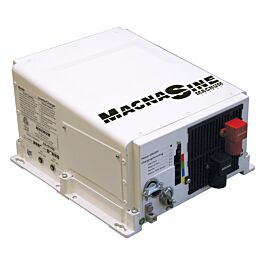
                      Check out this Magnum inverter. It's a bit more economical.
                      Note: We are no longer offering this product due to long lead times. Should you need assistance or if you would like to explore alternative recommendations, please Contact Us or call us directly at 800-383-0195.


                      Their website where you can download the specs and a manual.


                      Always download the manuals and read them BEFORE you buy to make sure it will suit you and your needs/wants. Make sure you understand them.

                      This inverter can supply a 5 sec surge of 8500 watts which "should" start your pump BUT you must find out the requirements of your pump first.

                      I must repeat this... You must find out the requirements of your pump first.

                      The inverter puts out 240 or 120 or a combination. It is also stackable so you can get more power if you need from more than one of them together.

                      Take a look at it. It's quite a bit less than 3000 dollars but it is still a good chunk of change.
                      My blog: http://greenerground.blogspot.com/

                      Comment


                      • #12
                        I keep hoping AE will go the way of HD flat screens. Get cheaper and cheaper! Unfortunately, that doesn't' appear to be the case. I've learned more about power and current from this thread that I've ever learned in my entire life. So, the journey begins. One purchase at a time.

                        Comment


                        • #13
                          MB- All I've heard for the last 12 years since we put in the first part of our system was "$1. a watt solar coming soon!" yet no one has ever seen it.

                          Quality equipment is still the way to go. A couple of my KC120's put out a weird voltage reading years ago- 9.2 volts in full sun. I called up Kyocera and the gal says "how many in your array?" Fourteen at the time. "How many are malfunctioning?" Three. "OK sir, we are sending your FOURTEEN panels. They have discontinued the 120 watt panels so we are sending you 130 watt panels, is that o.k.?" "No ma'am, sorry I didn't make something clear, only THREE panels are giving me problems." "Yes I heard you, Kyocera's policy is that when 10% of an array goes, we will replace the ENTIRE ARRAY."

                          And that my friends, is why you won't see me investing in china freight stuff. 8 years into a 25 year warranty and without any guff, any wiggle, any BS, they replaced ALL my panels. Even sent me the new panels PREVIOUS to sending a call tag for the original 14!

                          Had I bought junk, I would have been stuck like chuck...

                          Buy a little bit at a time, buy your batteries last. A panel or two one month, a panel or two the next, pretty soon you'll have a nice system going. That's exactly how most people do it. Solar is very nice in that way. Good luck.
                          Boris- "He's famous, has picture on three dollar bill!"

                          Rocky- "Wow! I've never even seen a three dollar bill!"

                          Boris- "Is it my fault you're poor?"

                          Comment


                          • #14
                            Thank you guys. It requires a commitment of both money and the time to learn what you need to know. But input from people who have done it is priceless. I agree about buying from a reputable manufacturer. In fact, I saw dozens of much cheaper stuff, all made in china, and it just sounded like junk.

                            http://www.samsclub.com/sams/shop/pr...613&navAction=
                            This inverter is only $388.00 and is tempting. What do you think?

                            While I'm buying a part at a time, I was wondering about those 'kits' from like Costco's and Sam's to make do until I can do it right.

                            What do you think of those kits?

                            Comment


                            • #15
                              MB- do you already have a generator or are you planning on buying one for a backup?

                              If yes or even the potential for yes, then don't bother with that inverter in that link.

                              You want a real AE inverter that also acts as a CHARGER.

                              You mentioned a well pump, a generator (sized correctly) will run your well pump. Hooked up to a INVERTER/CHARGER it will also charge your batteries while your pumping your water.

                              The one in the link won't do that.

                              An easy way to think about inverters is that if they come with an electrical cord type plug- IN GENERAL, they aren't what your looking for. For the sticklers- notice I said "IN GENERAL."

                              You want to be able to wire your inverter into the panel box of your house, not drape power cords all over and jury rig stuff.
                              www.homesteadingandsurvival.com

                              www.survivalreportpodcast.com

                              "Don't be too proud of this technological terror you've constructed..."

                              Comment

                              Working...
                              X